

24 HOUR CINEMA

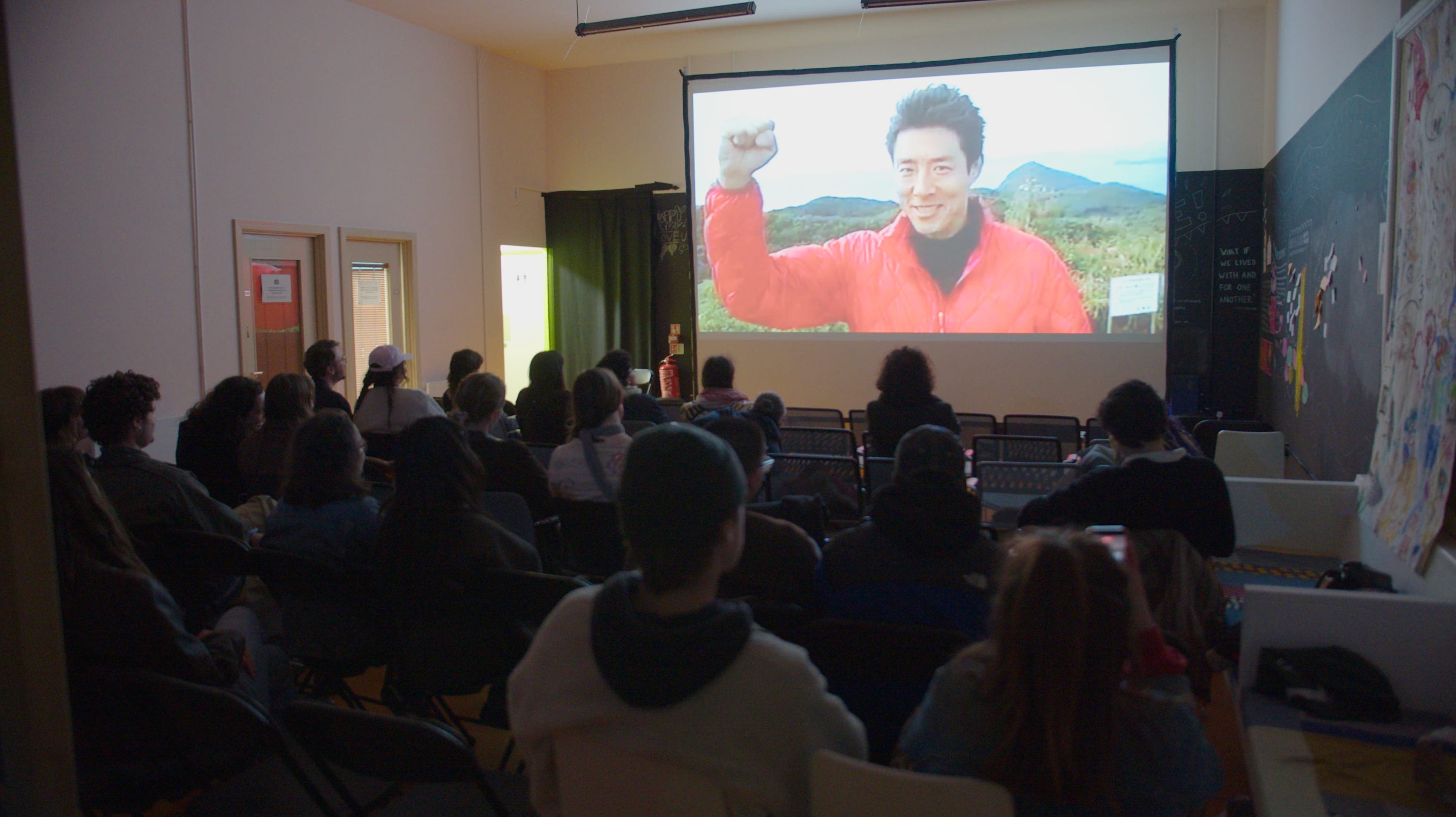
Today, Cinema Year Zero presents a new essay by Ellisha Izumi, reflecting on the unique position of participating as both programmer and audience member at Double Wonderful’s 24 HOUR CINEMA experiment.
Ellisha is a freelance film historian based in London (she/they).
24 Hour Nostalgia
From 12 noon Friday 10th April to 12 noon Saturday 11th, curator-provocateurs Double Wonderful hosted a 24 hour, non-stop film screening. Like a screening of Bela Tarr’s 7.5 hour Satantango or a Scala overnight movie marathon, this was endurance cinema. But with no advertised programme, no start times and no billed collaborators there was an added twist: ‘embrace the unknown’.
My role shifted throughout the event. I co-curated and introduced one of the films, I worked shifts on the door checking tickets (while stealing glances at the screen behind me) and stayed on as an audience member. Despite my involvement behind the scenes, the rest of the programme was kept a mystery to me.
When I walked in and started watching, I had missed the start and I didn’t know if what was on screen would be on for another 2 minutes or 2 hours. Waiting to the end of the film to find out what it was felt familiar. As a viewer surrendering control and practising patience I was reminded of watching TV as a child, with no access to a remote or TV guide. I fondly recalled the curios I would find as they unfolded in front of me, in contrast to the highly individual experience and control when streaming or channel surfing today. At 24 Hour Cinema if I missed something I couldn’t rewind, press the info button or try the +1 channel. Going along for the ride and accepting the unknowability changed my relationship to what I was watching, forcing me to reflect on my spectatorship.
When each new film started the sense of the unknown persisted and a process of constant evaluation was initiated. While I could identify the features I tried to absorb all the context clues from the international shorts to deduce where they were from and how they were made. When each short film finished I scanned the credits intently, trying to commit the names of characters and directors to memory, so I could find them later and log them accurately on letterboxd (a thought process which forced me to contemplate the insufferable performativity of my own cinephilia).
After a couple of hours, I took a toilet break as my film and spoken intro was coming up in 30 minutes. When I returned, the film before mine had already started, so I was constantly reassessing what I was watching: was it a documentary or fiction? How did they gain access to film in so many television news studios? Did this have a big budget or was this incredible escalating story of a Russian rapper called Husky actually real? Post-screening research tells me the truth of Lucifer (2019) lies somewhere in-between: it was a mockumentary. As I marinated in the mode of watching the unknown, I suddenly felt the intro I was about to give felt redundant, even antithetical to the spirit of the event.
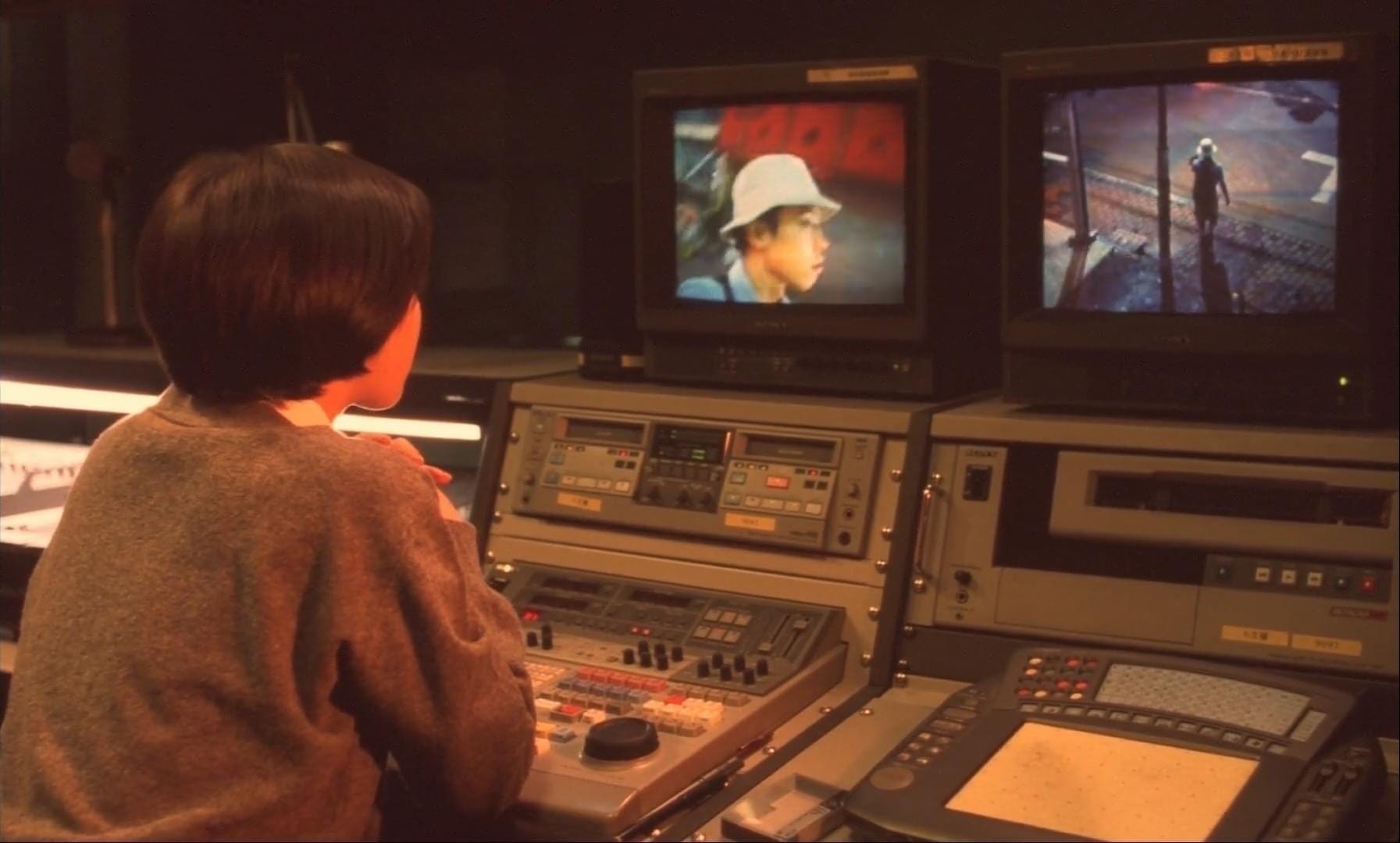
The film I co-curated was 20th Century Nostalgia (1997) a feature film directed and co-written by Masato Hara and a lesser known example of denpa – a genre of Japanese cinema and anime responding to y2k modernity in the city and online. The film follows a teenage girl called Anzu, who had spent the summer filming life in Tokyo with the charming oddball Toru. When Toru abruptly leaves, Anzu tries to edit their combined footage into a film. In my intro I picked out themes that I hoped would prime the audience to enjoy the film: the highs and lows of the creative process, how the different filmmaking styles of the characters reflects their perspectives: where Anzu was an optimist Toru was frequently pessimistic about Tokyo, the placed he dubbed “the artificial forest” creating artistic montages from the blinding lights of “a city that cannot sleep”. As I watched the other films over the course of the evening and the following morning, I was surprised and exhilarated to see the themes of 20th Century Nostalgia echoed and refracted through the others. Connections born from chaos and my contextual intro just added to the variety of presentation.
With each new film, there was a sense of being over-stimulated and vastly inspired. From Canadian vampires, to adverts helmed by Harmony Korine and Tony Scott, shorts from local filmmakers to features such as Hi, Mom! Brian de Palma’s 1970 black comedy starring a young Robert de Niro. Like many others in the films and in the audience de Niro’s character is an aspiring filmmaker, and as we watch him peer through a consumer camera set up in front of his window to capture his unaware neighbours, the audience watches the watcher, the apparatus of the camera is made visible and confronted with their own role as a viewer amongst viewers, a community of voyeurs, and the themes of surveillance and spectatorship are repeated across the night. As unexpected links were made, neural pathways forged from across the globe, across time, in different languages, different genres and different aesthetics.
Another running theme was the perseverance of filmmaking: from Anzu’s efforts to edit coherence out of Toru’s footage, to Sion Sono’s BAD FILM shot with handheld cameras in 1995 and finally edited and released in 2012. This theme was highlighted by the section ‘London Lonely’ a trio of penetrating documentary shorts including Lift (2001) by Marc Isaac, who seemingly spent hours, days and weeks standing in the lift of a tower block, filming and interviewing residents he got to know over time, producing something permanent from a transient space. Boris Gerrets’ People I could have been and maybe am (2010) was shot entirely on a mobile phone Armed with the mission to break through urban anonymity, Gerrets finds his documentary subjects by chance encounter, and over the course of the film becomes intimately entwined with their affairs and addictions at great emotional cost. Bringing things to the modern day and in parallel to the 24 hour endurance of Double Wonderful’s screening was the recent release, 6 TILL 6, in which the filmmakers gave themselves one rule, keep the camera running from 6am Saturday to 6am Sunday as they explored gentrification and interviewed subjects in East London.
The experience was like a concentrated-film-festival: condensed and more potent, a whiskey with no mixer. There was a constant negotiation between the desire to watch as much as possible, versus physical comfort and bodily needs, toilet breaks, snacks, coffee, tinnies, cigarettes, a conversation with a familiar face, or taking a walk to stretch your stiffening limbs. You had to make the experience your own. I attended the screening from 3pm-11pm and opted to go home at night, before returning at 9:45am for the final stretch.
Waking up after a short sleep at home and forcing myself through the motions of my morning routine was not easy, but to make up for my failure as a night owl I would return in the morning. I had committed to a final shift on the door and glad that I had. Like the filmmakers of 6 TILL 6 my experience with 24 Hour Cinema gave me London at a cross-section, as I passed run clubs and families starting their day out and returned to 24 Hour Cinema I saw the overnighters head home, binning their empty cans and searching for transport. I thought of Bar Italia by Pulp, about the 24 hour bar which saw party goers and office workers cross paths for a coffee at dawn, the two tribes casting judgement on the others’ opposing lifestyle, but there is no judgement at 24 Hour Cinema., just mutual understanding of an unusual endeavour and commitment.
As I returned to the screening I felt deeply comforted that art and unique programming was still going, was still there even when I wasn’t.