

Hard-Time Lover: TFFF Review

Welcome back to our coverage of The Final Film Festival “In Competition”.
Today, Tom de Lancy Green reviews the discordant Brazilian entry Hard-Time Lover.
And if you missed our “Totally Spies” magazine launch, there will be another chance to pick up a copy on 1st September at The Carousel, where we will be screening The Mole Agent.
Then on 4th September, we are back at The Cinema Museum for the penultimate edition of NOT BY LYNCH: Under The Silver Lake. There might just be a few copies of the issue available there too.
Hard-Time Lover (João Pedro Faro, Brazil, 2026)
Discomfort is drawn out in João Pedro Faro’s Hard-Time Lover (2026) to an extreme itch, like a room that hasn’t been cleaned in a while. Each shot is a party you want to leave, sometimes out of existential crisis, others out of dread. The narrative itself is simple, which makes its kookiest imagery seem all the more oblique, as if there’s a skeleton key to the story you’ve dropped down the drain.
In essence, Hard-Time Lover is a city symphony played on a lone tuba, with a hang-dog protagonist (Miguel Clark) black-eyeing the film’s face. The city is Rio de Janeiro, shot in a sickly and dusk-ish photography that gives it the look of chicken livers. Like most cities, there’s something secret operating in the night that Clark’s stoner slouches into by accident. Is this a comedy? Playing on the twin fears of vampirism and harsh noise concerts certainly suggests so. Faro isn’t content with laughter, though—a squirm is more appropriate.
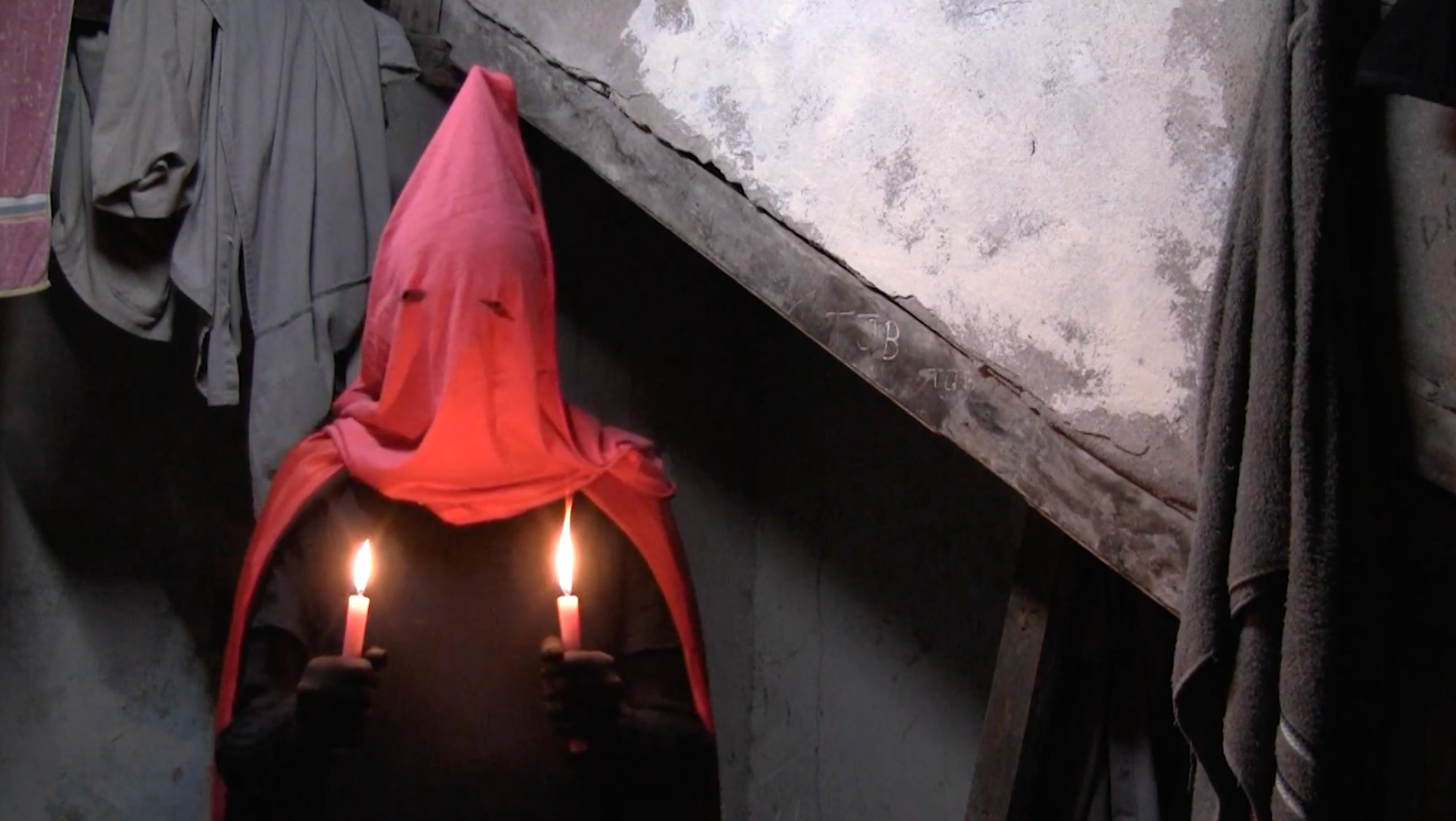
But there are sequences that aim for pleasure more overtly. Clark engages in some guerilla cartography as he tries to give structure to his night-time wandering. Faro appropriately gives equal weight to Clark’s map and the streets themselves, imbuing the city with the structure and neatness of isometric paper. The appearance of masked figures standing cross-like in Abu Ghraib stances disturbs, but doesn’t shock. Protagonist notwithstanding, Faro doesn’t seem to have much interest in the druggy angle here. Nothing is psychedelic, even if it is surreal—Weird, in the Fisherian sense. Things are there when they ought not to be. Then a slow march through the town, shantyish and rugged, evokes Pedro Costa’s trembling Rembrandt-isms, especially the opening of Vitalina Varela (2019). Here it’s a funeral without a corpse—unless the dead body is Rio itself.
About the most uncool thing a film like this could do is be sentimental, but it bravely decides that street cred is overrated. Faro has a knack for filming a person tidying out of concern for someone else. An interior before clean-up remains a memorable image from the film, collage-like and disarrayed, sweetly re-arranged by Clark for his lover. Then there are some flagrantly candid compositions of the aforementioned couple in embrace that are a nice contrast to the artful layouts of hooded masked figures under street-lamps. And for sheer durational testing, Hard-Time Lover deserves props: this is an admirably off-putting film, the length and gestational qualities of which ill-serve it for a large audience. Some films don’t care for such things anyway. Tom de Lancy Green