

Softshell: TFFF Review

Welcome back to our coverage of The Final Film Festival “In Competition”.
Today, Blaise Radley surveys the soup of Softshell.
If you missed our “Totally Spies” magazine launch, there will be another chance to pick up a copy on 1st September at The Carousel, where we will be screening The Mole Agent.
Then on 4th September, we are back at The Cinema Museum for the penultimate edition of NOT BY LYNCH: Under The Silver Lake. There might just be a few copies of the issue available there too.
Softshell (Jinho Myung, USA, 2024)
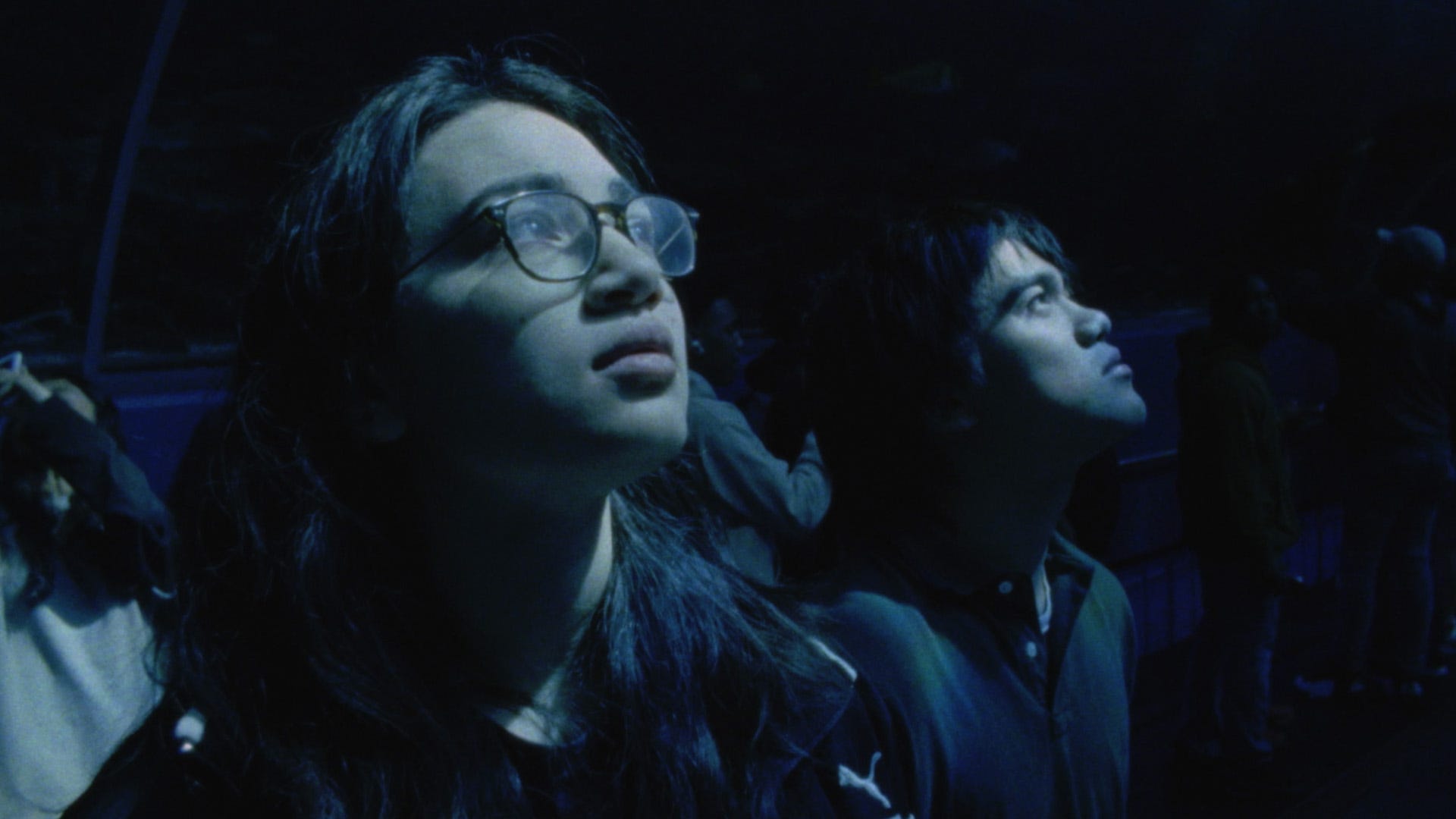
Softshell, Jinho Myung’s strange, intimate debut, opens on a moment of mourning for its two protagonists, Thai-American half-siblings Jamie (Caledonia Abbey) and Narin (Legyaan Thapa). The initial images could be mistaken for a documentary of Buddhist funeral rites, cutting between the different faces of the people assembled, accompanied by the overlapping hum of voices from around the inner-city temple. For their part, Jamie and Narin look dazed but not overly melancholic. Both in their early twenties, life has only just opened up to them—so what means do they have to process a loss like this?
That subdued emotional reaction is what gives Softshell the backbone (or shell) for its drifting narrative. Part slice-of-life microdrama, part cathartic road trip, part gritty NY indie, at each stage Myung refuses to give the audience a straightforward answer about how Jamie and Narin feel about their mother. Instead, emotional details emerge through the distractions each sibling immerses themselves in, whether it’s Jamie’s new job at the zoo and her broader affinity for animals, or Narin’s hard-headed desire to be given more responsibility at his jiu-jitsu gym.
In keeping with the low-key tenor, Softshell is mainly constructed from airy, documentary-style images, the handheld floatiness of the camera both reactive and inquisitive. Paired with the visible cracks and distortions of the film grain, many scenes play out like spliced-together home movies, even as the closeness with which DP Rhys Scarabosio shoots each scene lends the images an underlying unease. This is real life but strained by being blown up to such a big-screen scale, threatening to reveal the siblings’ repressed melancholy at any moment. Even the most casual chat can’t sit still, fidgety and with no fixed end.
The casting of non-traditional actors, in addition to the 16mm photography and on-location shooting, puts this firmly in the same lineage of abrasive New York dramas as the Safdies, full of rough edges and hard to pin down. Scenes cut between snippets of conversations, drifting in and out of focus without always recalibrating to the speaker. This is interspersed with dislocating fourth-wall-breaking portraiture—typically the two leads looking directly to camera as soporific ‘80s synths play, or another New York local warping in and out of focus. Through that scrambling of aesthetic markers, Myung positions the death of Jamie and Narin’s mother not just as a personal loss but an existential one, the last firm bond two second-generation immigrants shared with their mother’s homeland. Afterwards, nothing feels grounded.
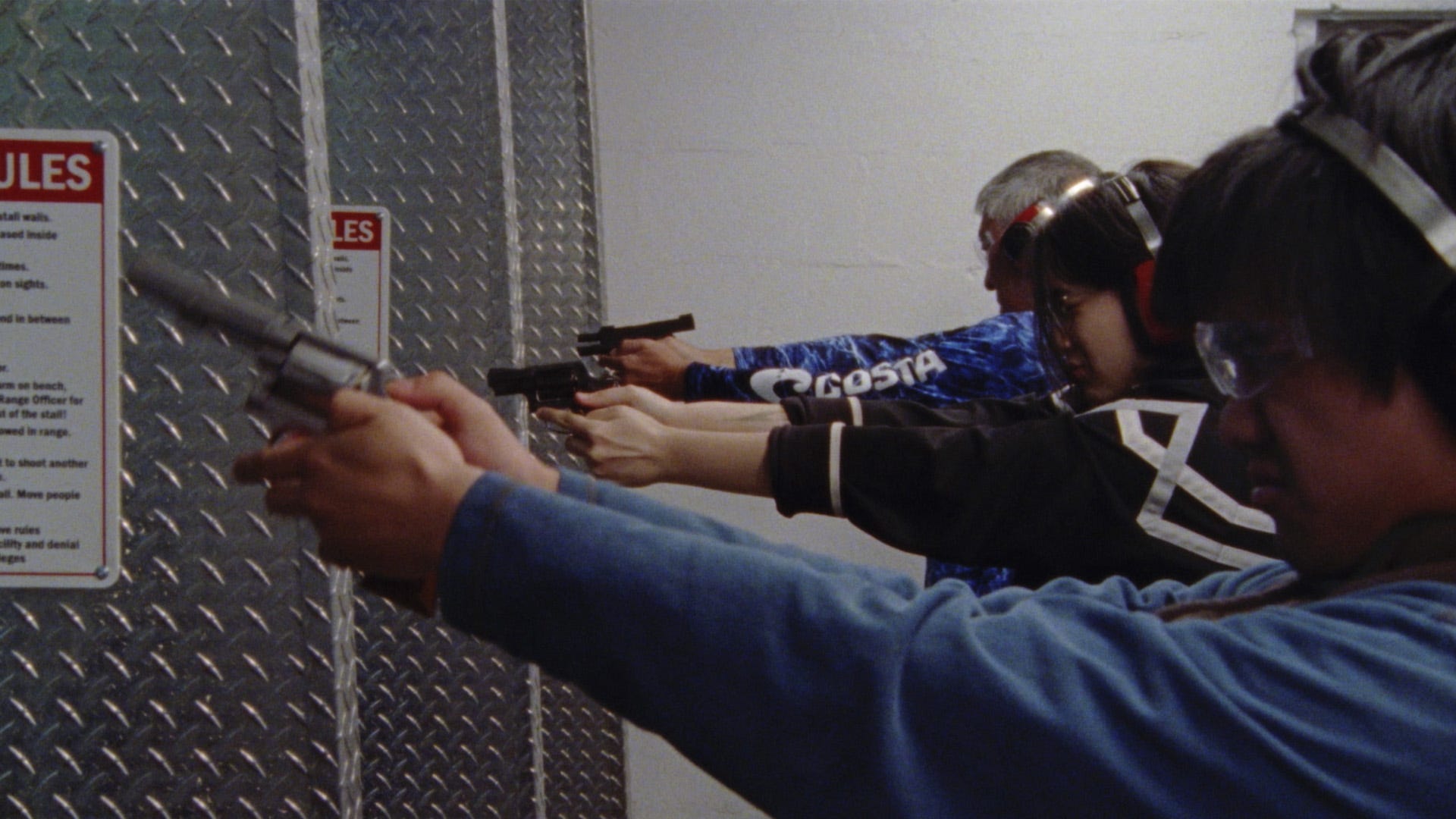
That need to reconnect with the world around them manifests most clearly in a spontaneous trip the pair take to Atlanta. Along the way, Jamie refers to a “twoness”—the way they each perceive themselves internally, and how the wider world perceives them individually, an idea that manifests in the film’s most poignant sequence: the Korean cowboy. Played by real-life Korean cowboy Kenneth Addington, he encounters Jamie and Narin through random happenstance and acts as something of a paternal figure, taking the siblings out on the river to fish for crappie and to a firing range to blow off steam, all the while offering small tidbits of advice in his deep Southern accent. It’s a surreal but simultaneously deeply empathetic step away from reality, a place where appearances and behaviours needn’t be so rigidly aligned.
And yet despite that reprieve, back in New York connecting with other people remains difficult, such that Jamie’s interest in animals often supersedes—or at least acts as a proxy for—her connection to people. The rather cruel death, burial, and later rebirth of a softshell turtle is afforded far more focus and space than her mother’s funeral, though the same could also be said of the various video games Jamie plays or Narin’s time spent at jiu-jitsu (itself a substitute for the Muay Thai he would like to practice but can’t find a gym for). Life goes on, routines loop round and round, and it’s only through slight observable adjustments that any emotional shift can be measured. Even in its more pointed sequences, Myung’s resistance to formula and easy answers makes those small character turns quite moving—a remarkable feat for a first outing. Blaise Radley