

Cinema Year '26: January
28 Years Later: The Bone Temple / Saipan / The History of Sound

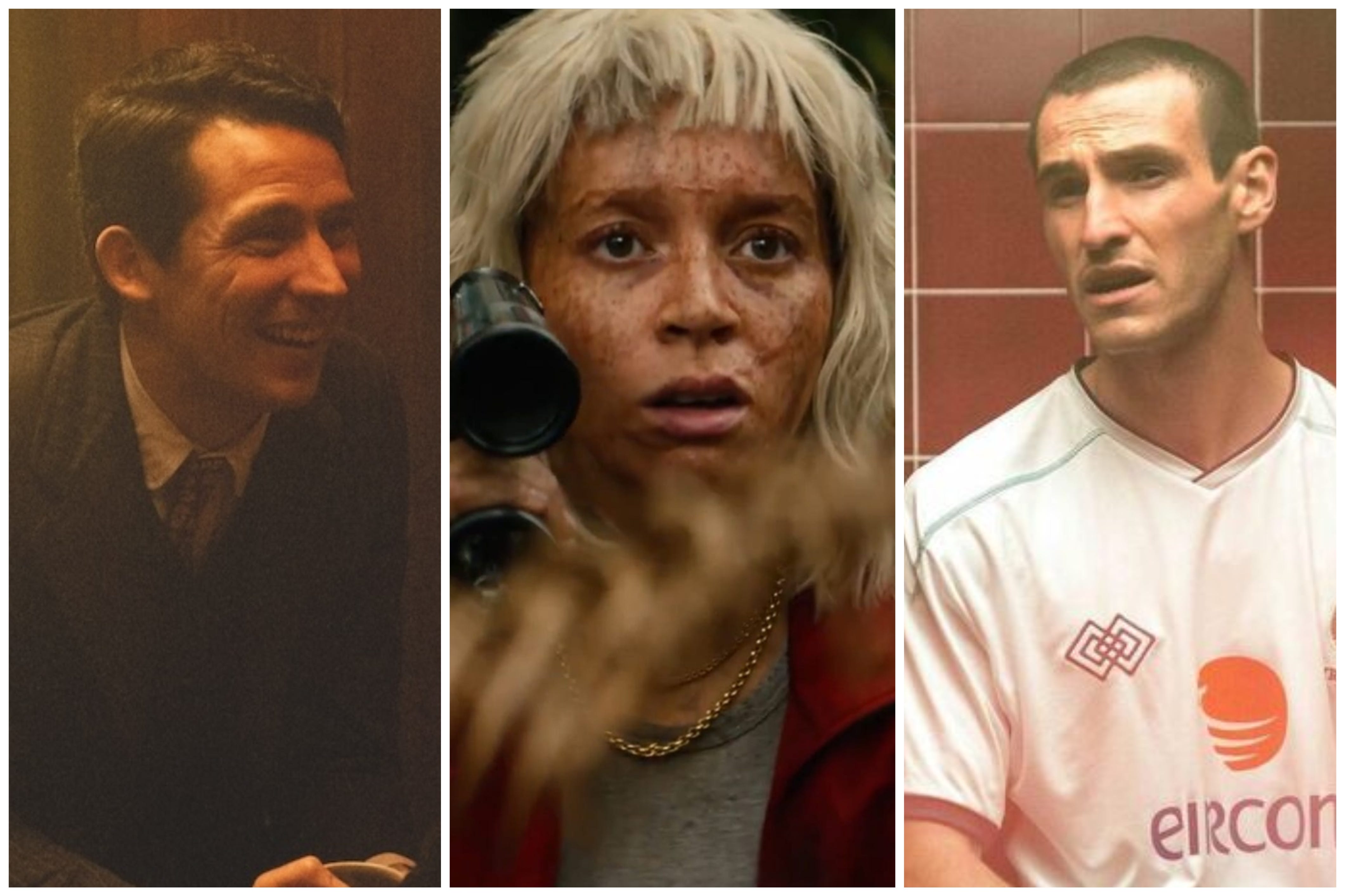
Welcome back to Cinema Year Zero. Reviews of three British/international co-productions kick off our new release segment for 2026.
Don’t forget to subscribe to receive this and more film writing direct to your inbox.
NOT BY LYNCH continues next Saturday, 7th February at The Cinema Museum with Kiss Me Deadly (1955). A programme note by Alison Rumfitt will be exclusively available at the event.
28 Years Later: The Bone Temple (Nia DaCosta, 2026, UK/US)
28 Years Later: The Bone Temple has inadvertently turned me into a bonafide Danny Boyle believer. Shot back-to-back with Years, you might expect The Bone Temple to benefit from the continuity of such a process, developing the warped digital aesthetics that made Boyle’s film (our number 5 of last year!) such an offbeat surprise. Unfortunately, the temporal and textural proximity of Nia DaCosta’s fourquel only emphasises what is desperately lacking by comparison. Like the cultish island community in Years, I can’t help but yearn to RETVRN.
At the time, much was made of the final scene of Years, in which eight youngsters dressed in Jimmy Savile cosplay acrobatically dispatched a swarm of “zombies”, their colourful tracksuits tripling as nods to the Power Rangers and the Teletubbies as well. The tonal incongruity promised something even more blockbuster-agitating than Years—but rather than disrupting the status quo of the 28 franchise, where nihilism is the dish of the day/week/year, the Saviles are instead absorbed into DaCosta’s humdrum post-apocalypse. As head Savile impersonator Sir Lord Jimmy Crystal, Jack O’Connell pontificates at length, as all memorable villains do. But when so much of the dramatic tension leans on him monologuing before *slam* banging a table or curling his lips as he says something nasty, every charismatic psychopath from the past thirty years of cinema flashes before your eyes.
Not only does DaCosta mishandle the Savile situation by reshaping his specifically-British heinousness into a more recognisable pop culture template, she simplifies the rest of the production too. Gone are the iPhone 15 Pro camera rigs, replaced with everyone’s favourite Arri Alexa. Gone are the punk-flex hyperreal images and bonkers editing, replaced with steadicam stability and swooping tracking shots; a creative choice that feels a particularly poor fit for the galling violence of Jimmy and his seven fingers. And gone is Young Fathers’ harmonising score, reverent and disturbing all at once, replaced with Hildur Guðnadóttir’s trademark droning cello and, worse still, a number of ironic (literal) needle drops. Because we love when a song that’s tonally out of step with the situation gets played, don’t we folks?
What frustrates most is that there are kernels of interest in Garland’s ham-fisted script. There’s a soporific quality to the bonding scenes between occult pacifist Dr. Kelson and hulking alpha zombie Samson, which, while dulled by DaCosta’s adherence to formula, still plays in novel contrast to the perverted theism of Jimmy and his Savilian skin-flayers. The finale, too, stages an intriguing confrontation between the film’s two opposing philosophies, a far cry from the hordes of infected the zombie format normally demands. And then Cillian Murphy shows up to explain The Themes in a coda that exemplifies the placid earthbound qualities of this entry over its nutty forebear. Maybe I need to give Yesterday (2019) another shot. Blaise Radley
Saipan (Glenn Leyburn & Lisa Barros D’Sa, 2025, UK/Ireland)
It can be tempting to boil contemporary football culture down to narrative. We are compelled to look beyond the sport’s corporate takeover by projecting personality onto individual and team performances. The pundit class of ‘Barclaysmen’, which is dominated by ex-Manchester United players of the Alex Ferguson era, uses this storytelling to prey on viewers’ nostalgic romances with the sport.
Inevitably, a film has emerged from this phenomenon. And given the popularity of self-parodic angry man Roy Keane’s persona, it stands to reason that the Saipan Incident would become the subject. The confrontation on the eve of their 2002 World Cup bow between then-Republic of Ireland captain Keane (Éanna Hardwicke) and his manager Mick McCarthy (Steve Coogan) led to the former’s (self-imposed?) exile from the national side, a subject of continuing controversy.
The openness of this story asks for an adaptation to go beyond tabloid moments. But scribe Paul Fraser doesn’t find much beyond the headlines. There was room for an Eastwoodian take on this material: a film which elevates football iconography to the stuff of myth, and then pushes the elements against each other to reveal their contradictions. But Leyburn and Barros D’Sa fail to synthesise the off pitch drama with the game itself.
This is hardly an impossible task. Nick Love’s hooligan cycle captures the immediacy of the crowd, while Mike Bassett: England Manager satirises the media circus in its deconstruction of a Proper Football Man. Directors as varied as Wim Wenders and Corneliu Porumboiu have explored the metaphysical space that football can occupy. But Saipan doesn’t even attempt a visual expression of the sport’s pleasures, leaving the film as an inert stage play.
Alongside this, Britpop-backed training montages stand in place of character development for further members of the squad. Flashbacks of Keane as a nipper, kicking a tattered ball against the walls of a terraced house, are painfully juxtaposed with the adult Keane playing in his back garden. By the fifth time, you may ask: it can’t go on like this, can it? Ben Flanagan
The History of Sound (Oliver Hermanus, UK/USA)
The collecting and field recording of folk songs in the early twentieth century endures as a sticking point for folk music purists. Once it is sealed in Edison wax, the music is no longer transmitted through oral tradition, but through modern technology–so how can it still be considered “folk”? When the hidden lives of queer people factors into the story, as it does in The History of Sound, this is further complicated.
The History of Sound is a warm albeit formulaic story of two gay men in 1910s America from vastly different socioeconomic backgrounds who form an indelible bond over their love of folk. It conjoins two of screenwriter Ben Shattuck’s own short stories. Paul Mescal rehashes Connell from Normal People (2020) as Lionel, a rural working class Kentuckian whose synesthesia and ensconcement in Appalachian music leads him to the prestigious New England Conservatory of Music. Josh O’Connor also finds familiar footing as David, whose bourgeois Transatlantic upbringing leaves him with a closed-off ennui that, despite their growing love, always remains a wedge between them.
Shattuck cleverly weaves the tone of the chosen folk songs into the narrative, with the lovelorn story of a star-crossed impoverished maid urging her love to find a richer wife in ‘Silver Dagger’ being the song that brings two together, but ultimately becoming a harbinger for their complicated relationship. Similarly, ‘The Unquiet Grave’ brings prescience to Lionel during a period of mourning. As the pair embark on an ethnomusicological quest to capture the songs of America, often from isolated rural people who have never encountered a phonograph before, the warmth of the tale seeps through in this recreation of groundbreaking history, of voices being captured for eternity: the voice of a 1910s farmer’s wife now available to play on the Smithsonian website.
There proves to be contention regarding the purpose of the collection project, leading to devastating revelations for Lionel. Nevertheless, one cylinder secretly remains, specifically made for him. A permanent imprint of the lives of two gay men during a time when their own oral history would have been otherwise shunned, forgotten, or deliberately destroyed. When framed as such, the capacity to capture such history overrules the fussiness of old tradition. Kirsty Asher