

Regarding Wiseman

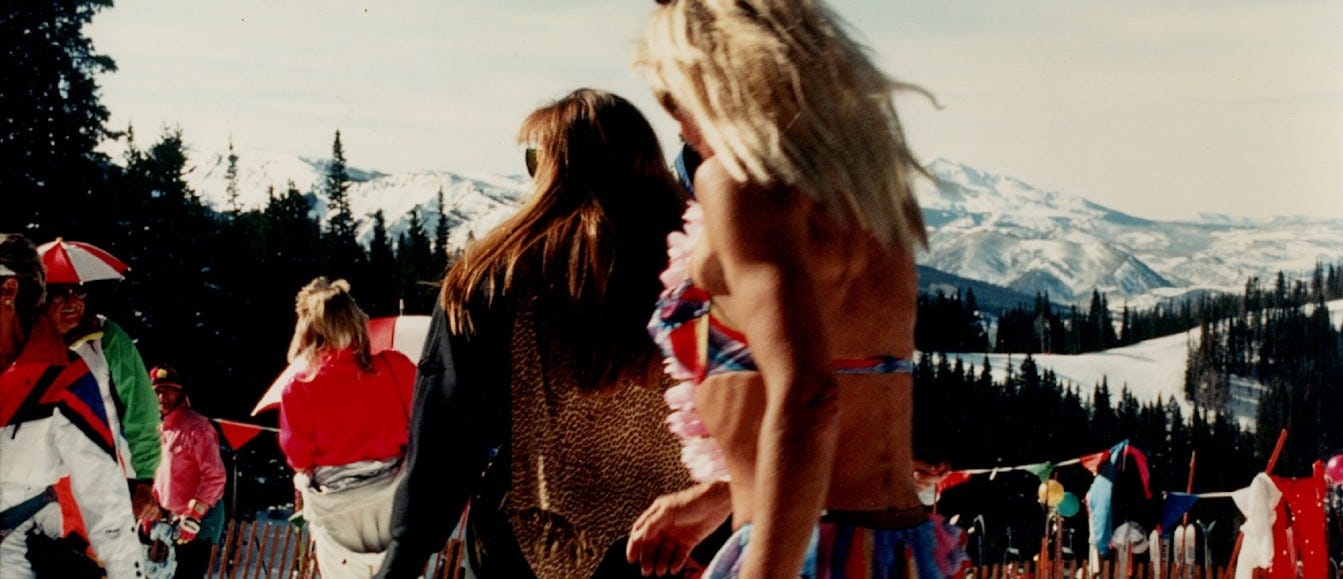
The first draft of this essay by Tom de Lancy Green was submitted to Cinema Year Zero’s editors on February 12th. Frederick Wiseman turned it into an obituary four days later.
A BFI-led retrospective across Britain is still disproportionate and meagre in comparison to the place Wiseman had in Western film culture (Tom’s dispatches from the first two months of the season can be found here and here). The name Wiseman was always on the lips of those in the constellation of this publication, a load-bearer for an art form that increasingly felt years behind him. His work is out there for those of us who look, but now some of its possibilities have been foreclosed, which is perhaps the thing he fought against most in his art. At all moments, the world can be re-shaped, potentialities await actualisation, the social sphere’s death has been exaggerated.
One can resist the urge to lionise, and it certainly wouldn’t be in Wiseman’s interrogative nature to do so, but sometimes the heart must win out: 96 years of age was simply too young to have lost him.
Frederick Wiseman’s works belong to that strange cultural decline from the late 1960s through Reagan and Clinton. As the capitalist machine realised it would not be able to satisfy its polity with reality, postmodernism slowly took over, reducing things, people, and ideas to iconography and fantasy. President Clinton himself said: ‘It depends on what your definition of “is” is.’ Existence became contingent, co-opted, re-moulded, unstable. By now, candidness is never value-neutral, and images are never unloaded or unsmeared with idealist dust and grime. Fighting this tide, Wiseman is perhaps D. A. Pennebaker’s only true disciple, an American lapsed radical with a cool, hip punchiness undergirding an agitated fly-on-wall scanning.
Radicals, however, have a tendency to calcify as scepticism sets in. In this regard, Wiseman is a peculiar case study. The tone of his films from anywhere south of 1980 sits opaquely between jaded rebellion and a more studied, fraught contemplation. Wiseman’s involvement in the 60s moment of high-modernism naturally leads one to look for a treatise on something as lofty as The American Nation. It’s rare for any one artist to even attempt this, but when they do, it inevitably leads them to the melting pot gateway of Staten Island (James Gray’s The Immigrant [2013]), the flatlands of the White Sands Proving Ground at the site of the Trinity Test (David Lynch’s Twin Peaks: The Return [2017]), the racism of the American South (Toni Morrison’s Beloved [1987]), or even a consciously freewheeling sprawl across the country’s culture (Thomas Pynchon’s works, Bob Dylan’s ‘Desolation Row’ [1965]).
Wiseman surely belongs to the latter category. A single film mightn’t be enough to do this alone, although Belfast, Maine (1999) comes close. But Wiseman’s maturation brought with it a curiosity that pokes around the fluffy skirting boards and rusted plumbing of God’s United States, a termitic burrowing that marks genuine growth from those iconoclastic days in Pennebaker’s long shadow.
His later works are more reminiscent of poetry than essays, though none are without their discursive qualities. It’s one of the cinema’s finer pleasures to sit in Wiseman’s meeting rooms as discourse unfurls, be it on the obligations of public institutions to accommodate commercial interests (National Gallery, 2014), the capacity for sympathy in Flaubert’s novels (1990’s Aspen), or fathers searching for answers to the questions of post-carceral reintegration (Public Housing from 1997, which we discussed in previous dispatches).
One thing Wiseman was not credited for enough: drawing back the veil on menial jobs, processual labour, working with one’s hands. And these forms of work are always extensions of a broader idea: those hands might belong to framing craftspeople in the National Gallery, but they are not neutral aestheticians. Everyone is doing their part in the maintenance (!) of a certain kind of superstructure. Why do paintings need frames? Maybe for the same reason that, in the very next sequence in National Gallery, an exhibition needs a lavish opening night with media attention. This is The Way Things Are Done.
Althusser tells us: it’s the ideology, stupid. Always immanent to organisations, any idiot can say that they are operating within the contradictions of society. But, surprise: the contradictions of society are also operating within you! One would be silly to pretend otherwise. Maybe this is why so many of Wiseman’s films come across so caustically. He happens upon a great many people—bureaucrats, mainly—who tell on themselves so easily. Recall Mark Twain’s apocryphal dictum: ‘If voting made any difference, they wouldn’t let us do it’—and if openly revealing oneself to be a morally disinterested footsoldier of the superstructure had any real consequences, I doubt Wiseman would have much to do with any of this.
Aspen is all about the superstructure. Wiseman here skirts the twin problems of metonymic symbolism and detached, hyper-observant ‘realism’ with a hilarious overview of a Colorado mountain town fueled by the concurrent economies of bourgeois lifestyle tourism, mining, and the church.
Like scaffolds in the film’s architecture, the church appears in four variations. Gregorian chants open the film—patience is already set in, and Wiseman watches intently, monastically. A men’s discussion group asks what marriage means in the eyes of the Lord; a seminar later on asks the same about living in the then-current economy. Finally, at the film’s end, the leap has been made from Protestant asceticism to Evangelist proselytising. American capital’s white, snowy vapours have infused Aspen’s wood-panelled nervous system. This orange on white—the Donny T special—recurs frequently. A cabal of tanned investors gather in one of the town’s snowy lodges, pulling the shades and running a gamut of plastic surgery phenotypes that flatten racial differences—noses, eyelids, cheekbones—into a Caucasian nightmare of loveliness.
At least they’re semi-open about it. At the opening of a local artist’s gallery exhibition, the artist’s underhanded philosophy is to paint ‘what she sees’, a loaded phrase as ever. Once again: the superstructure is within you. Her paintings are flattened, photo-realist depictions of phone booths, pantries, and more four-walled boxes. Wiseman takes the American bourgeoisie as a frequent subject—they have more than enough rope to hang themselves with, after all. But it’s ironic that he so often happens upon images so delicate and fleetingly special whilst spending so much time with this loutish, repugnant class: these paintings, and the taste they represent, are terrible.
Postmodernism in Aspen lurks around the corner like the bum behind Winkie’s in Mulholland Dr. (2001). Fredric Jameson wrote in Postmodernism: The Cultural Logic of Late Capitalism that commodity and aesthetic production had effectively merged in that dreaded, Fukuyamist breakdown of history’s grand arc. Well, in Aspen’s funniest sequence, set in a cavernous house on the mountainside, an art lesson is delivered by the owner of a wall-size print of Warhol’s Mao (1972-73). The Chairman is mounted to get a full view out the double-storey windows towards the town, whilst the monied class inside the citadel get a crash course in perspective. West and East collapse at the ice caps, the frontier—the End of History is upon us!