

Belief is Not Without Pathos: TFFF Review

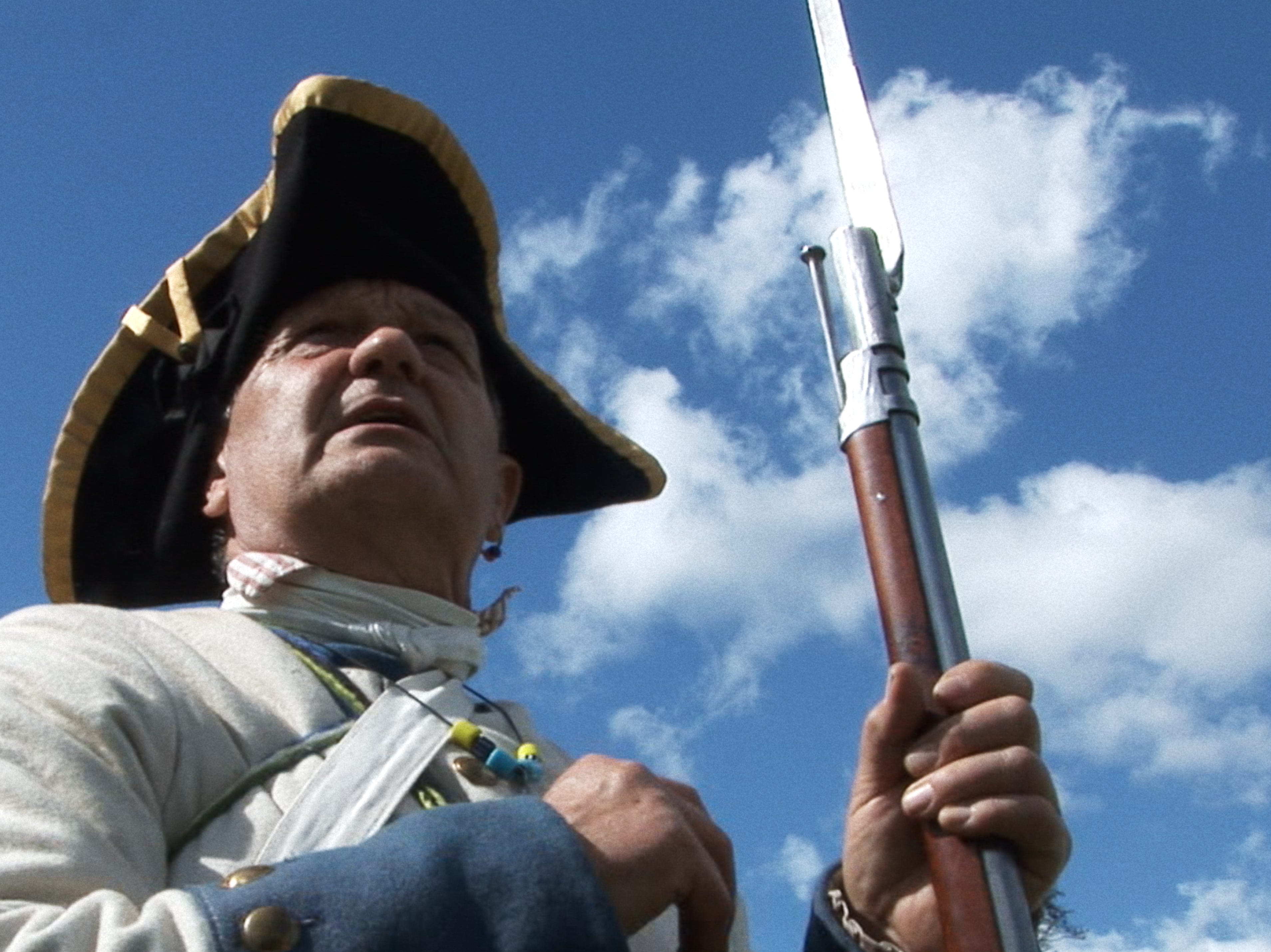
Our coverage of The Final Film Festival “In Competition” draws to a close today, as Kirsty Asher finds an end to history in Belief is Not Without Pathos.
If you missed our “Totally Spies” magazine launch, there will be another chance to pick up a copy on 1st September at The Carousel, where we will be screening The Mole Agent.
Then on 4th September, we are back at The Cinema Museum for the penultimate edition of NOT BY LYNCH: Under The Silver Lake. There might just be a few copies of the issue available there too.
Belief is Not Without Pathos (Owen Vince, UK, 2026)
The fragments of our past lay all around us, if we have the incentive to look closer. If you walk along the Old Kent Road, you follow the footsteps of centurions and pilgrims. If you continue on to Deptford and Blackheath, you walk where countless rebels made their last stand against monarchical tyranny. Antiques shops are brim with ancient coins, with guns, with army uniforms and helmets that a person once owned, fought, and maybe survived a great war while wearing. We all own, and eventually discard, so many pieces of history that can end up in farflung or unexpected places. It is this background hum of history which vibrates with an analogue buzz in Owen Vince’s Belief is Not Without Pathos (2026), a documentary and cinematic collage of the people up and down this country who devote their lives to historic reenactment.
The film’s threads are connected by the discovery of historical items. At the beginning, artist Kit Reynolds displays photos of a Civil War reenactment from the 1980s, which he found quite by happenstance in some leftover bags from Deptford Market. Later, a WWI medical officer reenactor (in real life, he works at Guys and St Thomas’ Hospital) tells of how his interest in reenactment began when he purchased a WWII firefighter’s helmet from an antique shop. These physical remnants of the past serve as our closest link to the thoughts, feelings and actions of our forebears. Vince documents how vital tangibility is to our connection with historic events.
The “marvellously anachronistic” atmosphere of these reenactments: medieval knights gathered for the camera in front of a large wheelie bin; a WWII Soviet partisan eating a Mr Whippy; two Cavaliers wander across the frame out of shot, replaced by legs dressed in jeans and short skirts crossing in front; is perfectly captured. There are wisps of this anachronism in the film itself, with improv jazz breezing through scenes of Civil War scuffles and WWII reenactors chatting; middle age blokes huddled or dawdling. During moments of self-documentation, his 2000s-era box television sits with the SMPTE colour bars onscreen, at one point glowing in candlelight. Tight close-ups of the historical figures on the History of the Old Kent Road Mural give way abruptly to static shots aboard the Overground and Southeastern trainlines.
Interviews with reenactors involved in various historic periods give an anthropological context to its purpose, but it is the throughline of the 1980s Civil War reenactment photos which capture the attention, as well as the spirit of the film. Reynolds muses on the 42 years between these photos and the present, on what it meant to reenact the Civil War then, on the eve of the Miners’ Strikes, and now, in a time of increasing political polarity. A hunt ensues for the exact geographical location of the photographed tableaux, somewhere in Croydon, and to discern its change in landscape and skyline. In this, the historical reenactment becomes history, and Vince constructs his own reenactment in the quest to find the frame, to recreate the frame anew.
Interviewees regularly call reenactment an older person’s hobby. But these people were all young once, swinging a poleaxe in a Home Counties field, or marching to the double not far from a motorway’s roar. As what was once modernity slips away, what do these participants gain from a fixation with the past? Certainly there are hints throughout of political leanings - a weapons display adorned with both a Nigel Farage cardboard cutout and a St George flag is certainly saying the quiet part out loud. One older participant suggests that an abandonment of 1930s and ‘40s principals has led us to the “mess” we’re in. Vince astutely identifies a nation with such a self-referential and deep-seated historical legacy that its people feel drawn to whatever tangibility of it they can glean. Whether an ongoing downturn in the popularity of historical reenactment will continue is not certain. Belief Is Not Without Pathos is part of a broader cultural wave that examines our desire to capture and recreate history, to set it down in cinematic record, for those who come after us. Kirsty Asher
TFF In Competition:
Hard-Time Lover (João Pedro Faro, Brazil, 2026) - Tom de Lancy Green
Eramus (Oliver James Hunt, UK, 2026) - Joseph Owen